Hidden Sugars: 30 Names of Added Sugar on Labels in 2026
Key Takeaways
The 30 names of added sugar that show up on US and EU food labels in 2026, grouped by chemistry, plus the splitting trick brands use to hide them and a 7-second decision rule for the back of pack.
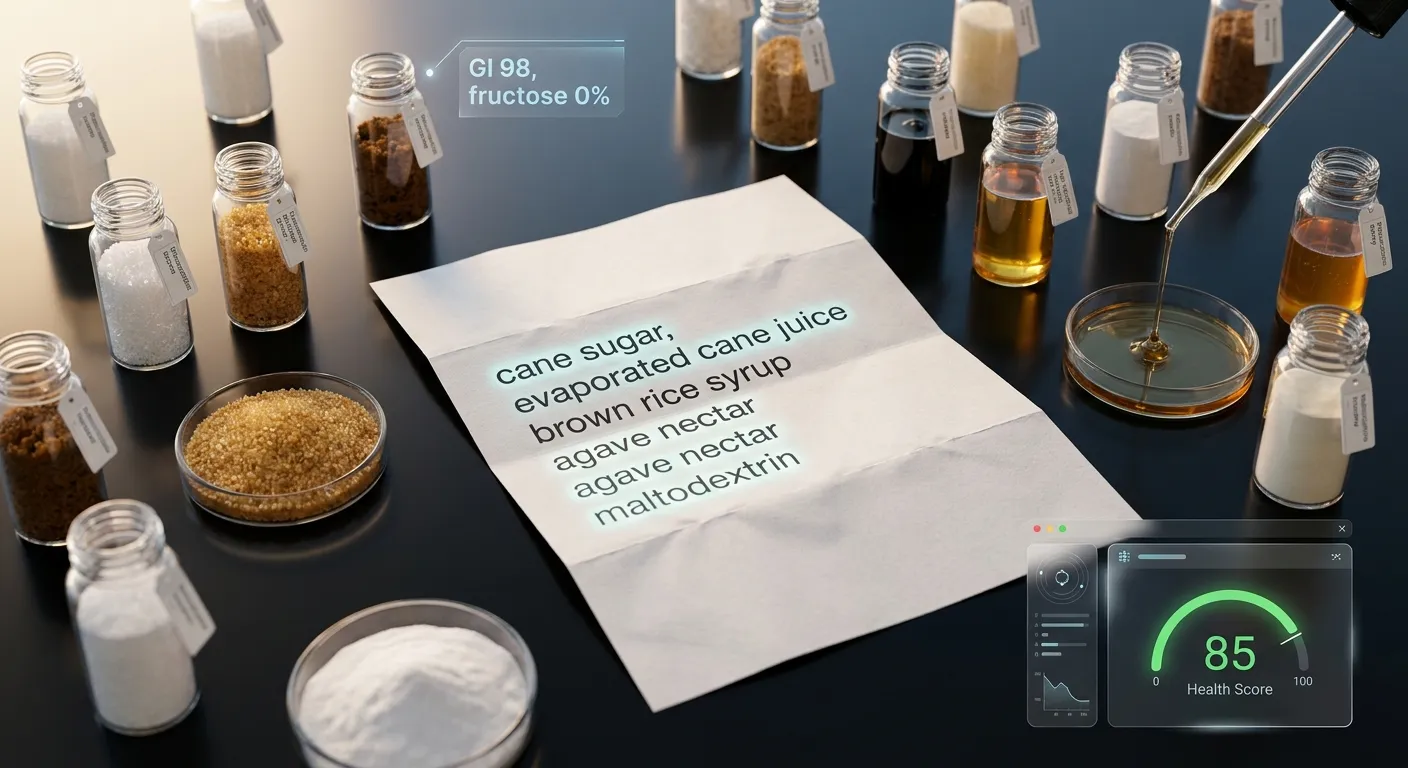
Maya is 33, has two kids, and just got an A1c result that nudged her into prediabetes. Her doctor said one thing — cut added sugar — and she went home and started pulling boxes out of the pantry. She expected to find sugar on a few obvious offenders. The cereal. The kids' yogurt. Maybe the BBQ sauce.
She found added sugar on 17 of 24 items. The pasta sauce. The "honey wheat" sandwich bread. The granola with "no refined sugar." The chicken broth. The plant milk. The oatmeal. The salad dressing she had been buying for years because the front said "made with extra virgin olive oil." Half the names she did not recognize — evaporated cane juice, barley malt syrup, fruit juice concentrate, rice syrup, invert sugar. They each sounded like an ingredient. They were all sugar.
This is the standard situation in a 2026 supermarket. The 2020 FDA rule that put an Added Sugars line on the back of every package was a real improvement — for the first time you can see how many grams a manufacturer added versus what came in the original strawberries. But the front still says "no refined sugar." The panel still buries the sweetener under three other names. And the grams line does not tell you which sugars are doing the work.
A note up front: this is general nutrition reading, not medical advice. If you have diabetes, prediabetes, are on a GLP-1, or are managing any other metabolic condition, work with a clinician on personalized targets. The 25g and 36g limits below are population recommendations, not your prescription.
What follows is the master list: 30 names for what is chemically added sugar, grouped by what your body does with each, plus the splitting tactic that keeps any single one from topping the ingredient list. Bookmark it, take it to the store.
The Short Answer
- Added sugar appears under more than 30 different names on US and EU food labels in 2026. Most consumer guides stop at 15 or 20.
- The FDA's mandatory Added Sugars line tells you the grams but not which sugars. A 12g entry can be one sweetener or six. The ingredient list is the only place to find out.
- Brands use sugar splitting — three or four different sweeteners that combined would top the ingredient list, but separately drop to positions 5 through 9. Kellogg's Special K Strawberry Protein Meal Bar has done this six times on the same label.
- Daily targets to aim at, per the American Heart Association: ≤25g for women, ≤36g for men, 0g for kids under 2, ≤25g for kids 2-18. The FDA Daily Value on labels uses 50g as the 100% mark, which is looser than AHA.
- A "no sugar added" claim does not mean zero sugar — it means none was added during processing. An orange juice with "no sugar added" still hits you with about 22g per cup from the fruit itself.
- Scan with Food For You if you do not want to memorize 30 names — the scanner flags every alias, computes the %DV against the 50g daily reference, and the Health Score penalizes products that split sugars across multiple positions.
What "Added Sugar" Actually Means in 2026
The FDA's definition lives in 21 CFR 101.9. Added sugars are sugars added during processing, sugars from syrups and honey, and sugars from concentrated fruit or vegetable juices in excess of what 100% juice of the same type would provide. Naturally occurring sugars — lactose in milk, fructose in a whole apple — do not count, because they come with fiber, protein, water, and a digestive matrix that blunts the glucose curve.
The line is drawn at concentration: if the sugars have been pulled out of the fruit, juiced, or boiled down, the protective matrix is gone and the FDA treats them like cane sugar. Honey from a jar is added sugar. A blueberry on top of yogurt is not, but blueberry juice concentrate sweetening that yogurt is.
Daily limits worth knowing:
- American Heart Association: 25g/day for women, 36g/day for men, under 25g/day (6 teaspoons) for children 2-18, zero for children under 2.
- 2025-2030 Dietary Guidelines for Americans: under 10% of daily calories from added sugar, about 50g on a 2,000-calorie diet. Harvard's Nutrition Source frames the threshold as a ceiling, not a target: there is no recommended amount of added sugar in a healthy diet.
- WHO: under 10% of energy from free sugars as a strong recommendation, with a conditional further reduction to under 5% (about 25g/day).
- FDA Daily Value on the label: 50g, the looser DGA threshold. The %DV on the panel is calculated against this.
The gap between these is meaningful. A granola bar showing 12g added sugar is 24% of the FDA Daily Value, but 48% of the AHA limit for a woman.
The 30 Names
Here is the master list, grouped by chemistry. Each entry gets one sentence on what it is and one on what to know. Where the metabolic behavior diverges meaningfully from cane sugar — agave's fructose load, brown rice syrup's glycemic index — the entry says so.
Sucrose family (the cane and beet group)
1. Sugar (cane sugar, beet sugar, granulated sugar). Pure sucrose: 50% fructose, 50% glucose bonded together. The benchmark every other sugar gets compared against.
2. Evaporated cane juice. Sugar. The FDA issued final guidance in 2016 calling this term "false or misleading" because it suggests fruit juice — manufacturers were told to relabel as "sugar," but the guidance is non-binding and the name still appears on many products in 2026, especially in the "natural" yogurt and granola aisle. Mentally translate to sugar.
3. Turbinado sugar. Raw cane sugar with a thin molasses film left on the crystal. Marketed as more wholesome. Chemically still sucrose; the trace molasses contributes tenths of a milligram of minerals per serving.
4. Demerara sugar. Larger crystals than turbinado, deeper amber. Still sucrose. The crunch on top of a coffee-shop scone is the only meaningful difference from white sugar.
5. Muscovado sugar. Unrefined cane sugar with most of the molasses left intact. Darker, moister, more flavor. Same metabolic effect as table sugar per gram.
6. Panela / piloncillo / jaggery / rapadura. Whole-cane sugar made by boiling sugarcane juice without separating out the molasses — common in Latin American, South Asian, and Caribbean cuisines. Marketing positions these as ancestral and unrefined, which is technically true. Glycemic effect is essentially identical to brown sugar.
7. Invert sugar. Sucrose split into its glucose and fructose halves by acid or enzymatic hydrolysis. Slightly sweeter than table sugar, stays moist, prevents crystallization. Common in commercial baked goods, candy, and ice cream.
8. Brown sugar. White sugar with molasses added back. Light brown sugar is about 3.5% molasses, dark brown about 6.5%. Sucrose with a flavor note.
Glucose-dominant syrups
9. Corn syrup. Glucose syrup from enzymatically broken-down corn starch. Used in commercial baking, candy, and processed food for moisture retention. Almost pure glucose; hits blood sugar hard and fast.
10. Glucose syrup. Same as corn syrup but starch can be corn, wheat, rice, or potato — EU labels say "glucose syrup," US labels say "corn syrup." Glycemic effect is high.
11. Dextrose. Pure glucose in crystalline form. The reference point for the glycemic index (GI = 100). Common in protein bars, gummy candies, and any "fast-acting carb" sports product.
12. Maltodextrin. Highly processed starch derivative — chains of glucose short enough to digest like sugar but long enough to dodge the "sugars" line on older labels. Glycemic index is often cited at 105-130, higher than table sugar. Common in protein powders, "low-carb" snacks (where it tears apart the marketing claim), and salad dressings.
13. Brown rice syrup. Liquid sweetener from rice starch broken down to maltose, maltotriose, and a little glucose. Published data puts its glycemic index at ~98, essentially pure glucose — the maltose chains unzip to glucose almost immediately. Common in "natural" granola bars and "healthy" cereals. The fructose-free angle is true; the blood sugar effect is worse than table sugar.
14. Malt syrup / barley malt syrup. Liquid sweetener from sprouted barley. Predominantly maltose, similar to brown rice syrup. Common in bagels, pretzels, and the malted-milkshake category.
Fructose-dominant syrups
15. High-fructose corn syrup (HFCS). Corn syrup enzymatically converted to a fructose-glucose mix. HFCS-42 (42% fructose) is the baking-and-processed-food formulation. HFCS-55 (55% fructose) is the soda formulation. The fructose travels unbound rather than bonded to glucose, which means it reaches the liver faster than the same dose of sucrose.
16. Agave nectar / agave syrup. Concentrated juice from the agave plant, marketed as a low-glycemic natural sweetener. The agave starch is enzymatically converted to fructose — the same process used to make HFCS. The result: agave is roughly 70-90% fructose by mass, higher than HFCS-55, higher than any other common sweetener in the supermarket. The "low GI" claim is true; fructose does not raise blood glucose directly. But the fructose goes straight to the liver, and a 2023 Journal of Endocrinology review tied high-fructose intake to elevated de novo lipogenesis, triglycerides, and NAFLD risk. This is the sweetener most marketed as healthy and most metabolically concerning.
17. Fruit juice concentrate (apple, grape, pear, white grape juice). Juice boiled down to a viscous syrup with most of the water removed. The FDA counts this as added sugar under 21 CFR 101.9 whenever the sugars exceed what 100% juice would provide. Apple juice concentrate runs about 60% fructose; white grape concentrate around 50%. "Sweetened only with fruit juice" is a sugar claim, not a health claim.
18. Date syrup. Concentrated date pulp, glucose-to-fructose ratio close to 1:1, glycemic index in the 47-55 range. Real minerals (potassium, magnesium), trace fiber. The most defensible sweetener in this group by intent; still counts as added sugar.
19. Crystalline fructose. Pure fructose in solid form. Used in some sports drinks, flavored waters, and protein bars. Same metabolic concern as agave.
Honey and molasses family
20. Honey. Roughly 50% fructose, 44% glucose, 1% sucrose, plus trace enzymes and antioxidants. The bioactive compounds are real but present in milligram amounts that do not offset the sugar load. The 2025-2030 DGAs and the AHA both count honey as added sugar.
21. Molasses. The dark, viscous syrup left after sucrose is crystallized out of cane juice. Sucrose with concentrated minerals — iron, calcium, magnesium, potassium per teaspoon are higher than in white sugar. Still 60-70% sucrose by mass.
22. Blackstrap molasses. Third boiling of the cane refining process. Less sweet, more bitter, more minerals (per tablespoon: about 20% DV iron). The mineral content is genuinely meaningful, which is why blackstrap shows up in plant-based diet discussions. Still added sugar by FDA classification.
23. Treacle. UK term for molasses. Black treacle is closer to blackstrap. Common in British baking imports.
24. Sorghum syrup. Sweet sorghum juice boiled down to syrup. Mixed glucose, fructose, and sucrose. Regional sweetener common in the American South.
25. Maple syrup. Boiled-down sap from sugar maple trees. About 90% sucrose by mass, with trace minerals (manganese, zinc) and polyphenols. Coming from a tree does not exempt it from the added-sugar line.
Caramelized and blended
26. Caramel. Sugar melted to brown. Functions as sugar plus flavor when listed as an ingredient. Caramel color, a different ingredient used for browning soda and sauces, is not itself sugar but is often paired with it.
27. Golden syrup. British and Australian inverted sugar syrup, amber-colored, used in baking and treacle tart. Inverted sucrose with caramelization notes.
28. Coconut sugar. Granulated sap from coconut palm flowers. Roughly 70-80% sucrose with small amounts of fructose, glucose, and inulin (a soluble fiber). Some studies put the glycemic index at 35-54, lower than table sugar, partly attributed to the inulin. Marketed heavily as a "natural alternative." Counts as added sugar.
Less obvious aliases
29. Corn syrup solids (dried corn syrup, glucose solids). Corn syrup with the water evaporated off, sold as a free-flowing powder. Functionally identical to corn syrup once it rehydrates in the product. Common in non-dairy creamers, dry drink mixes, instant soup, and any shelf-stable product that cannot afford liquid sweetener. The "solids" wording reads chemical and is easy to skip past.
30. "Natural cane sweetener" / "fruit sweetener" / "organic dehydrated cane juice solids." Marketing euphemisms on health-positioned products. None have FDA-defined identity standards; all are sugar. The 2016 FDA guidance specifically warns that words like "juice" attached to a cane sugar ingredient are false or misleading.
That is the 30. Some lists in circulation push to 50 or 60 by counting every regional name, every grade of brown sugar, and every variant spelling. The list above covers what you will actually see on a US or EU supermarket label in 2026.
Adjacent, but not itself sugar: ethyl maltol. A synthetic flavor enhancer that activates the same sweet receptors as sugar without contributing calories. Used at 5-100 ppm to amplify perceived sweetness, letting manufacturers cut actual sugar while the product still tastes just as sweet. Often labeled simply as "flavor" or buried in a proprietary flavor blend. Not on the Added Sugars line, but paired with the real sweeteners often enough to recognize.
Summary Table: Chemistry vs. Metabolic Profile
This is the table to bookmark. The "Watch for" column is the one to read in the aisle.
| Group | Names included | Fructose share | Glycemic profile | Watch for |
|---|---|---|---|---|
| Sucrose family | sugar, evaporated cane juice, turbinado, demerara, muscovado, panela, invert sugar, brown sugar | ~50% | Moderate-high (GI ~65) | Half of all "natural" euphemisms (#2, #6, #30) sit here |
| Glucose-dominant syrups | corn syrup, glucose syrup, dextrose, maltodextrin, brown rice syrup, malt/barley malt syrup | ~0-3% | Very high (GI 95-130) | Spikes blood glucose harder than table sugar |
| Fructose-dominant syrups | HFCS-42/55, agave, fruit juice concentrate, date syrup, crystalline fructose | 42-95% | Low GI, high liver load | Marketed "low-glycemic" but linked to liver fat and triglycerides |
| Honey & molasses | honey, molasses, blackstrap molasses, treacle, sorghum syrup, maple syrup | ~40-50% | Moderate (GI 55-75) | "Natural" framing; still added sugar by FDA |
| Caramelized & blended | caramel, golden syrup, coconut sugar | ~40-50% | Variable (coconut sugar GI 35-54) | "Natural alternative" marketing |
| Less obvious aliases | corn syrup solids, "natural cane sweetener," "fruit sweetener," "organic dehydrated cane juice solids" | varies | varies | FDA's 2016 guidance flags the "juice" wording as misleading |
Tired of memorizing 30 names? Create your free account and let the Food For You scanner flag every alias the second you point the camera at a label.
The Splitting Trick, In One Granola
Pick a "wholesome" granola off a shelf. The ingredient list looks like this (a composite of three real products):
Whole grain oats, almonds, cane sugar, brown rice syrup, sunflower oil, honey, dried cranberries (cranberries, apple juice concentrate), salt, natural flavor.
Cane sugar is the third ingredient. The brand looks reasonable.
Now combine the sweeteners by mathematical weight: cane sugar, brown rice syrup, honey, apple juice concentrate (inside the cranberries). Add them up and they sum to more than the almonds and often more than the oats. If the label said Sugar 24g, it would jump to the first ingredient. Listed separately, the same sugars drop to positions 3, 4, 6, and 7. The casual shopper sees oats and almonds at the top and thinks: real food.
This is sugar splitting. The FDA's labeling rules make it possible — ingredients are listed in descending order by weight, but every distinct ingredient gets its own slot regardless of whether it shares chemistry with the next one. Kellogg's Special K Strawberry Protein Meal Bar has listed added sugars under six different names on a single panel. Planters has split sugar three ways on the same nut mix.
The defense built by the 2020 rule was the Added Sugars line in grams. Even when the order is split across six positions, the total is now mandatory. A granola showing 12g added sugars per serving is honest about the math even if the ingredient list scatters it. The line does not tell you which sugars and therefore cannot warn about a fructose-heavy splitting pattern, but it is the most useful new piece of information on the 2026 label.
Heuristic: if a product lists two or more sweetener names in the first eight ingredients, assume splitting. Decide on grams, not order.
Where They Hide: Eight Aisles That Surprise People
Not desserts. Desserts are honest. The hidden ones are the products you would not flag.
Bread. Mass-market white and "honey wheat" loaves include HFCS or sugar plus maltodextrin. A two-slice serving can carry 4-6g added sugar. Sourdough, traditional rye, and basic three-ingredient whole-wheat do not.
Pasta sauce. A jar of "traditional" marinara from a major brand frequently runs 6-8g added sugar per half-cup — added to mask the acidity of canned tomatoes. Higher-quality jars list 0g or 1g.
Salad dressing. Bottled "balsamic vinaigrette" often has 4-6g per two-tablespoon serving. "Light" and "fat-free" versions are usually higher in sugar than the regular ones because fat is the easiest texture to replace with sweetener.
Granola and "healthy" cereals. The category most likely to use splitting. Cane sugar + brown rice syrup + honey on the same panel is the standard pattern.
Flavored yogurt. A 6-ounce strawberry yogurt cup runs 12-18g added sugar — more than a glazed donut. Modified corn starch and fruit puree concentrate hide alongside cane sugar.
Jerky. "Original" beef jerky is sweetened with cane sugar, brown sugar, and a syrup. Sweet-and-spicy and teriyaki go higher. Per-ounce sugar can rival a cookie.
Nut butter. Big-brand peanut butters list sugar as ingredient #2 or #3, often with HFCS or molasses. "Natural" peanut butters with peanuts and salt are sugar-free.
Sports drinks, electrolyte powders, and "wellness" beverages. Glucose syrup, sucrose, and dextrose are the typical sweeteners. "Zero sugar" electrolyte powders use sucralose, stevia, or monk fruit instead.
Fast take: any condiment, sauce, dressing, or "healthy" snack is a candidate. If you have not checked the Added Sugars line, assume there is sugar.
"Sugar-Free," "No Added Sugar," "Reduced Sugar" — What They Legally Mean
Three claims, three different rules. Knowing which is which keeps you from the most common label trap.
"Sugar-free" or "zero sugar": less than 0.5g of total sugars per serving, per 21 CFR 101.60. Includes both added and natural. Manufacturers can manipulate serving size to stay under, so a "sugar-free" gum at three pieces per serving adds up if you chew the pack. Most use sucralose, aspartame, stevia, monk fruit, allulose, or sugar alcohols. See our sweetener comparison for which to prefer.
"No sugar added" or "no added sugar": no sugar or sugar-containing ingredient was added during processing, per 21 CFR 101.60(c)(2). The product can still contain substantial naturally occurring sugar. A "no sugar added" 100% orange juice still delivers about 22g of sugar per cup — from the fruit, but it spikes blood glucose almost as fast as soda. Same trap for "no sugar added" applesauce, dried fruit, and frozen smoothies.
"Reduced sugar" or "less sugar": at least 25% less sugar per serving than the reference product. Useful for comparison, useless as a health claim. A "reduced sugar" yogurt with 12g instead of 18g is still a high-sugar yogurt.
"No high-fructose corn syrup": marketing claim with no FDA definition. The product may use cane sugar, agave, fruit juice concentrate, or brown rice syrup instead. Often a tell that the brand has reformulated to a fructose-heavy alternative that is metabolically equivalent or worse.
Are the 2026 Alternatives a Real Escape?
Allulose, monk fruit, stevia, and erythritol are not added sugar by FDA definition, do not appear on the Added Sugars line, and have a glycemic index near zero. For someone trying to cut added sugar specifically, they are the practical replacement. The tradeoffs — taste, baking behavior, gut tolerance, the cardiovascular signal around erythritol — get the depth they deserve in our Allulose vs Monk Fruit vs Stevia vs Erythritol breakdown. Short answer: allulose for cooking, monk fruit drops for the table, stevia Reb M for beverages, erythritol with caution if you have cardiovascular risk factors.
Sugar alcohols (xylitol, maltitol, sorbitol) are a separate category. They contribute calories and can spike blood sugar (maltitol notoriously so), but FDA labeling treats them apart from added sugars. The nutrition panel shows them under their own line.
Honest framing: replacing every cane-sugar product with an allulose-sweetened one is not the goal. Eating mostly whole food and noticing when "no added sugar" turns out to be five sweeteners in a row is.
The 7-Second Decision Rule
You are in aisle 4 holding a granola box. No time for a 30-entry mental checklist:
Step 1: Check the Added Sugars line in grams. The single most useful piece of information on the panel. If the line says 0g, the rest of the label is mostly noise. If it says 8g and you are buying for a child, you have already used a third of the daily limit on one snack.
Step 2: Compare to your daily target. Women aiming at the AHA 25g limit can afford one 6-8g item per meal. Men at 36g have slightly more headroom. Children 2-18 should be under 25g for the entire day.
Step 3: Scan the ingredient list for two or more sweetener names. If you see cane sugar AND brown rice syrup AND honey, you have a splitting pattern. The grams are still the grams, but the splitting signals a brand trying hard to look healthier than it is.
Step 4: Check the %DV. Above 20% per serving is high. At or below 5% is low. This is the FDA's definition.
Four steps, seven seconds. Or, alternatively, point a camera.
The Bottom Line
The most useful thing the 2020 FDA rule did was force every package to declare added sugars in grams. That single line solved the biggest problem with the old label — that natural sugar in milk and sugar in a fruit-flavored dessert looked the same. It did not solve the other problem: ingredient lists scatter sugar under 30 different names and let manufacturers split a single sweetener into five line items.
The 30-name list is real. The splitting tactic is rampant. "No sugar added" is not the protection most shoppers think it is. The path through this in 2026 is not memorization — it is checking the Added Sugars line in grams, looking for splitting patterns, and ignoring health-coded front-of-package marketing.
Want this read for any food, not just the 30 names here?
The Food For You app scans any ingredient label and flags every added-sugar alias the second you point the camera at it — including the most common splitting patterns. You also get a Health Score (0-100) that penalizes products using multiple sweeteners, plus a NOVA classification that tells you whether the product was built by cooking or by chemistry.
Create your free account today and stop reading 30-item ingredient lists with a magnifying glass.
References
- U.S. Food and Drug Administration. Added Sugars on the Nutrition Facts Label. fda.gov/food/nutrition-facts-label/added-sugars-nutrition-facts-label
- U.S. Food and Drug Administration. (2016). Guidance for Industry: Ingredients Declared as Evaporated Cane Juice. fda.gov/regulatory-information/search-fda-guidance-documents/guidance-industry-ingredients-declared-evaporated-cane-juice
- American Heart Association. Added Sugars. heart.org/en/healthy-living/healthy-eating/eat-smart/sugar/added-sugars
- Harvard T.H. Chan School of Public Health. The Nutrition Source: Added Sugar in the Diet. nutritionsource.hsph.harvard.edu/carbohydrates/added-sugar-in-the-diet/
- U.S. Department of Agriculture and U.S. Department of Health and Human Services. Dietary Guidelines for Americans, 2025-2030. dietaryguidelines.gov
- Geidl-Flueck, B., Gerber, P. A. (2023). Fructose drives de novo lipogenesis affecting metabolic health. Journal of Endocrinology, 257(2). joe.bioscientifica.com/view/journals/joe/257/2/JOE-22-0270.xml
- Schermbeck, R. M., Leider, J., Powell, L. M. (2024). The Presence of Added Sugars and Other Sweeteners in Food and Beverage Products Advertised on Television in the United States, 2022. Nutrients. pmc.ncbi.nlm.nih.gov/articles/PMC11643446/
Frequently Asked Questions
Team Food For You
Reviewed by: Dr. Arthur Price
The Food For You team combines AI technology with nutrition science to help people make safer, healthier food choices.
Learn more about usMedical Disclaimer
The content provided in this blog is for informational purposes only and does not constitute medical advice. Always consult with a qualified healthcare professional for diagnosis and treatment of allergies.
Related Articles
Ultra-Processed Food: The 4 Legal Definitions of 2026
No official US definition of ultra-processed food exists yet, just four competing ones. What NOVA, the FDA white paper, California and Arizona each say in 2026.
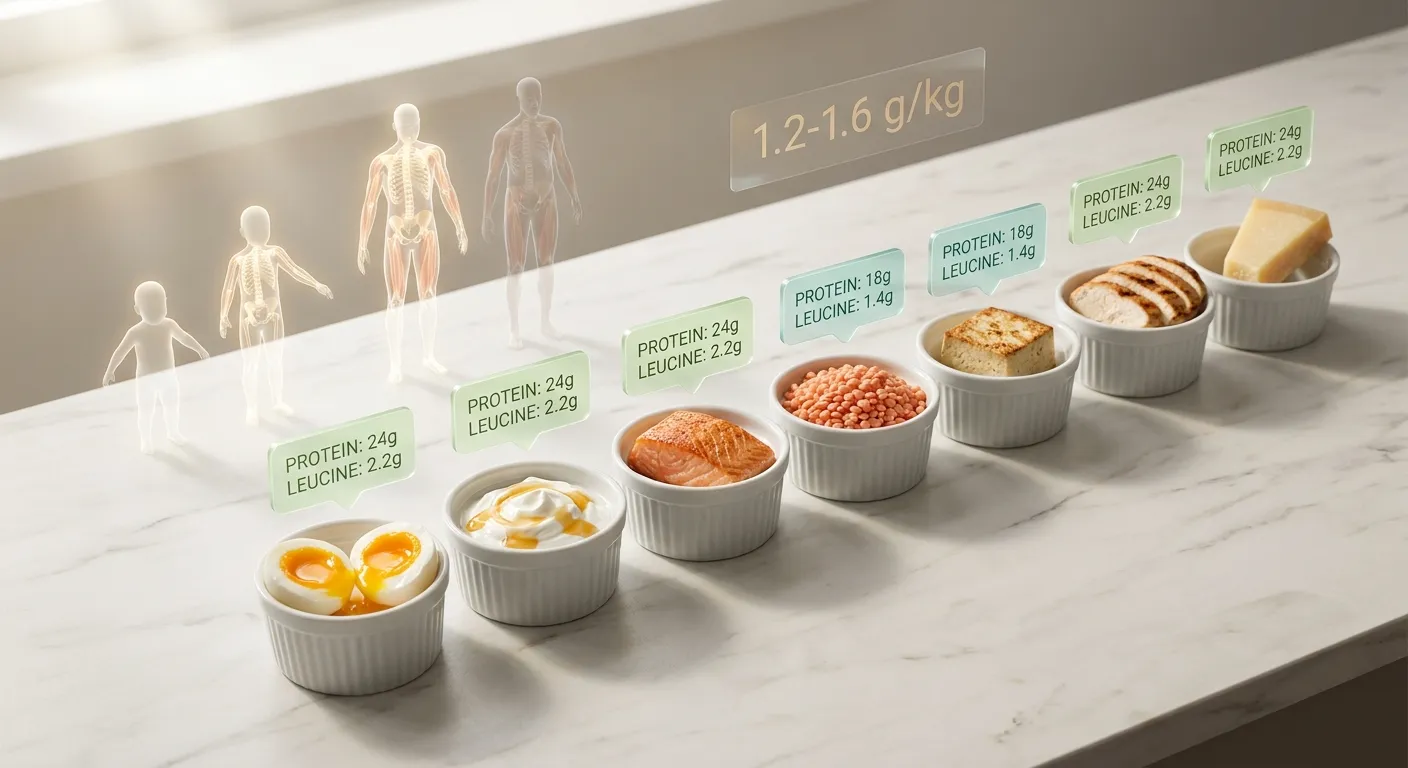
How Much Protein Do You Actually Need? 2026 Guide
The 0.8 g/kg RDA is from 1968. New evidence puts most adults at 1.2-1.6 g/kg, older adults higher. A by-age cheat-sheet, no powder required.
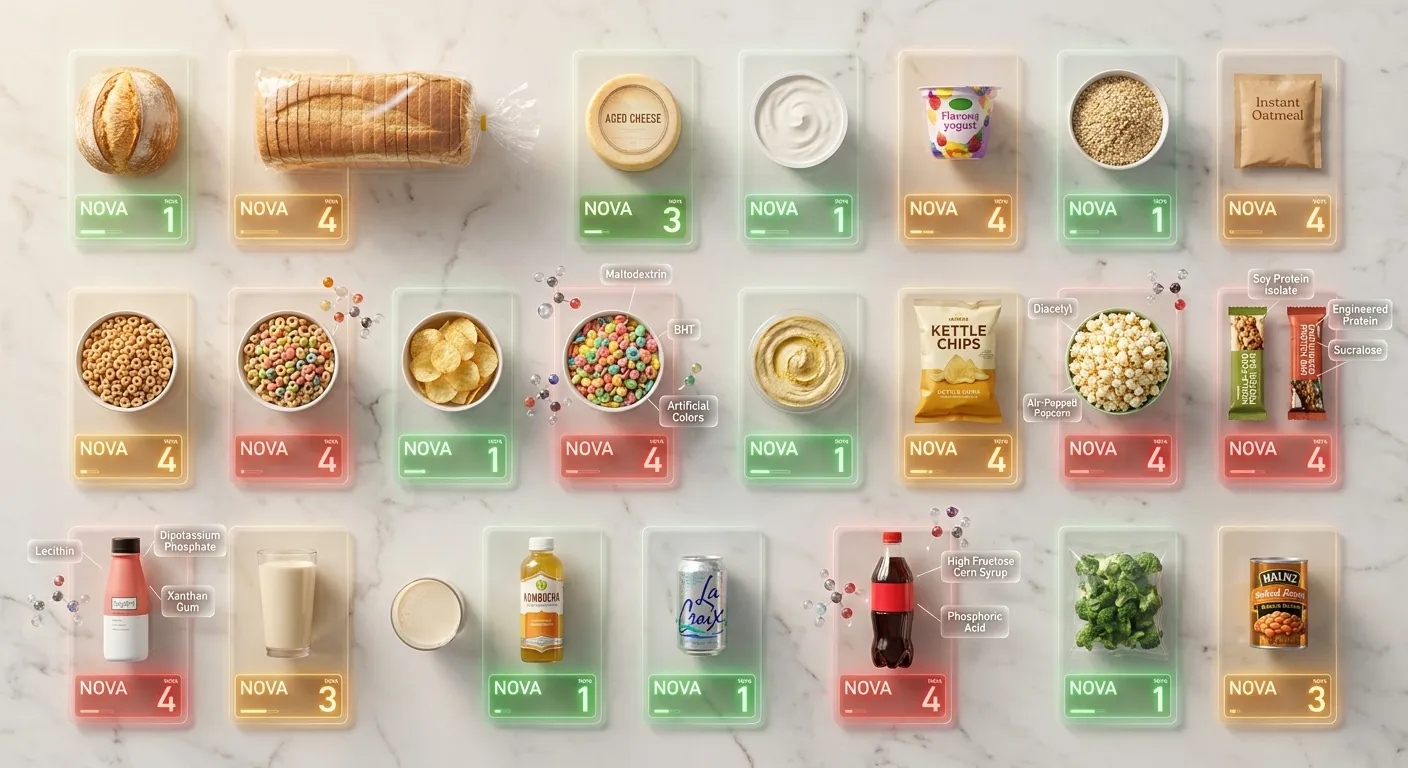
Is It Ultra-Processed? 30 Foods Decoded
A food-by-food NOVA verdict for 30 things in your cart: sourdough vs. supermarket loaf, RXBAR vs. Quest, oat milk vs. barista oat. With the why.
