What to Eat on Ozempic & GLP-1: 2026 Guide
Key Takeaways
GLP-1 drugs shrink your appetite to roughly a third of normal — and up to 40% of the weight you lose can come from muscle. The fix is label literacy. Hit 1.2–1.6 g/kg of protein per day, prioritize fiber, treat fat carefully, and learn to spot the new "GLP-1 Friendly" packaging claim, which has no FDA definition behind it.
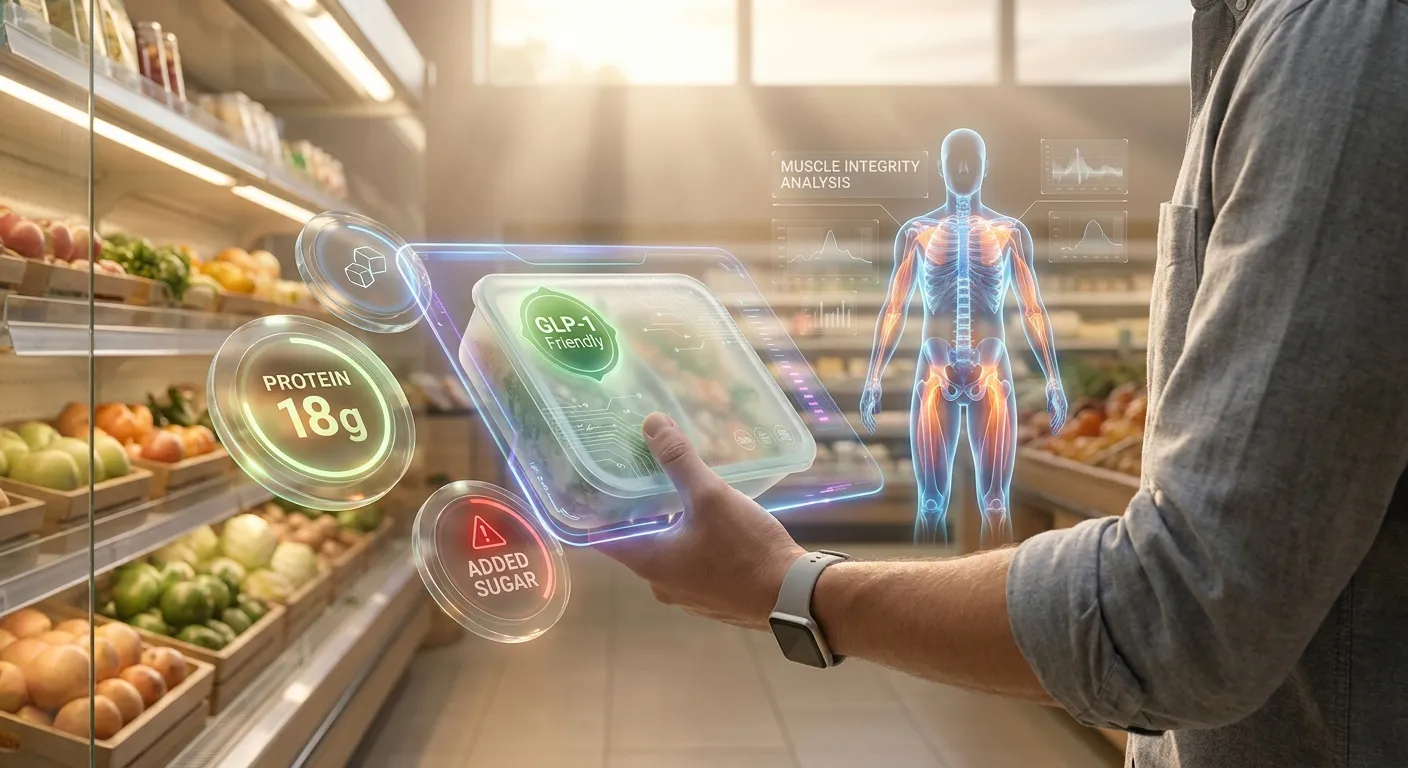
It's week six on Wegovy. You're standing in the cereal aisle, holding a box of "high-protein" granola, and you genuinely cannot remember the last time you finished a meal. Three bites of yogurt this morning and you were full. The scale is moving. Great. But your jeans are loose in a way that doesn't feel right, and your trainer says your grip strength dropped 12% since January.
This is the part nobody warned you about.
Roughly 1 in 8 American adults has now taken a GLP-1 drug, according to a 2024 KFF survey, and the number has climbed since. The pharmacology works. What hasn't kept up is the food advice. Most articles tell you to "eat protein and stay hydrated." That's not a plan. When your appetite is roughly 30% of what it was, every gram on the label matters, and every "GLP-1 Friendly" sticker on a frozen bowl is a marketing decision, not a regulatory one.
This is a guide to reading food labels when you have less appetite than you've ever had in your life — and more at stake.
A note before we go further: This is educational, not medical advice. Talk to your prescribing doctor about your specific plan, dose, and any side effects. Nothing here replaces a conversation with the person managing your prescription.
The 30-Second TL;DR
If you only remember three rules:
- Protein first, every meal. Aim for 20–30g before you touch carbs or fat. With a small appetite window, you may run out of room before you hit your target.
- Fiber second. 25–35g a day. It blunts the constipation almost everyone gets, feeds your gut bacteria, and slows blood sugar without adding bulk you can't tolerate.
- Watch the fat carefully. GLP-1s already slow gastric emptying. Pile fat on top and you've got a stomach that won't empty for six hours, which is how the nausea spirals start.
Everything else is a footnote.
Why Muscle Loss Is the Real Risk (Not Weight Regain)
The headline number from the STEP 1 trial — Novo Nordisk's pivotal 68-week study of semaglutide 2.4mg in 1,961 adults — is the one nobody puts on the marketing posters: about 39% of the total weight lost was lean body mass, according to the DXA substudy published in NEJM in 2021. A more recent placebo-corrected reanalysis in Circulation put the figure closer to 45.5%.
Put another way: for every 10 pounds you lose, around 4 may be muscle, organ tissue, and bone — not fat.
That's not unique to semaglutide. Diet-induced weight loss and bariatric surgery show similar ratios. But on a GLP-1, you don't feel the consequences in real time the way someone on a crash diet does. The drug suppresses hunger so cleanly that you can lose 18 pounds in two months without any hunger cues, then notice in month four that climbing stairs is harder.
Here's the other half of the equation, and it's the part most clinicians say out loud only when pushed: protein intake alone won't preserve muscle. A 2025 joint advisory from the American College of Lifestyle Medicine, the American Society for Nutrition, the Obesity Medicine Association, and The Obesity Society was direct about it — without resistance training, even perfect protein intake is "likely inadequate" to keep your muscle.
So the playbook is two-pronged: hit your protein target and lift something heavy two or three times a week. The food side is where most people fall short, and that's what a label tells you.
The 2026 Protein Math
The old RDA — 0.8 grams of protein per kilogram of body weight — was set for sedentary adults trying to avoid deficiency, not active adults trying to preserve muscle through a rapid weight cut. The new 2025–2030 Dietary Guidelines moved the goalpost to 1.2–1.6 g/kg/day. Most clinicians treating GLP-1 patients use the upper end.
What that looks like in practice:
| Body weight | Daily protein target (1.4 g/kg) | Per meal (3 meals) |
|---|---|---|
| 150 lb / 68 kg | ~95g | ~32g |
| 180 lb / 82 kg | ~115g | ~38g |
| 220 lb / 100 kg | ~140g | ~47g |
| 260 lb / 118 kg | ~165g | ~55g |
Now look at those per-meal numbers and look at your breakfast. A scoop of yogurt and half a piece of toast is maybe 8g. Coffee with oat milk is 1g. You haven't started the day, you're already 25g behind, and your appetite window for lunch is the size of a child's portion.
A Today report on a 2024 study found GLP-1 users averaged just 0.6 g/kg of protein per day — less than half the recommendation. Only 43% hit even 1.2 g/kg. The drug isn't the problem. The breakfast is.
Practical fix: the first meal of the day is where you eat protein you don't even feel like eating. Two eggs scrambled with cottage cheese (28g). A 30g whey isolate shake mixed into Greek yogurt (40g). A can of tuna on a slice of sourdough (25g). Boring works. Boring is the goal.
Tip: Scan your usual breakfast with the Food For You app. If protein is under 25g, it's not a breakfast — it's a snack. Register here to start logging.
The "GLP-1 Friendly" Label Trap
In December 2024, Conagra became the first major US food company to put the words "GLP-1 Friendly" on packaging — specifically, the "On Track" badge on 26 Healthy Choice frozen meals. Nestlé followed with Vital Pursuit, a brand built explicitly for GLP-1 users (cauliflower-crust pizzas, chicken bowls, sandwich melts), and later added a Boost mocha shot marketed to anyone wanting "natural GLP-1 production." Lactalis launched Ratio Pro Fibre yogurt, 20g protein, 10g fiber. Mission Foods slapped the badge on its Carb Balance tortillas. Smoothie King has GLP-1 shakes. Six UK supermarkets — Morrisons, Asda, Co-op, Iceland, M&S, Ocado — all rolled out dedicated GLP-1 ranges in a single month of early 2026.
The catch: "GLP-1 Friendly" has no FDA definition. None. The USDA reviewed Conagra's specific use of the claim and decided it wasn't misleading given the surrounding nutrition context, but there's no rule, threshold, or audit. A bag of pretzels could legally print "GLP-1 Friendly" on the front tomorrow.
When you decode the press releases, the brands using the badge tend to mean roughly the same four things:
- High protein (usually ≥15g per serving)
- Lower calorie (often 280–350 per meal)
- Source of fiber (≥3g, sometimes much more)
- Smaller portion (because you can't eat a full plate anyway)
Those are reasonable criteria. But notice what's not on that list: the level of processing, the type of fat, the presence of soluble corn fiber doing the heavy lifting on the fiber claim, or whether the protein is real chicken or hydrolyzed soy isolate.
77% of Vital Pursuit sales come from people who aren't on a GLP-1, per Nestlé's own reporting. That tells you exactly what the badge is doing — it's a halo. It signals "this is the sensible-portion, high-protein, modern person's frozen meal." Sometimes it is. Sometimes it's a Healthy Choice meal that already existed for ten years with a sticker added.
The scan strategy: ignore the badge. Flip the box. Apply the same three checks from any nutrition label.
- Protein per serving ≥20g (not 12g; bars and frozen meals love to round up their marketing)
- Fiber ≥4g and not from "soluble corn fiber" or "tapioca fiber" as the first fiber source listed
- Recognizable first three ingredients. Chicken, brown rice, broccoli — fine. Soy protein concentrate, modified food starch, dextrose — that's a chemistry set in a freezer aisle.
Foods to Eat, Limit, and Avoid
The clinical food advice for GLP-1 users converges across NPR, AARP, and Cleveland Clinic. The list isn't controversial. What's missing from those guides is the NOVA processing layer.
Eat (NOVA 1–2)
- Protein anchors: eggs, Greek yogurt, cottage cheese, skinless chicken, fish (especially salmon, sardines), lean beef, tofu, tempeh, lentils
- Fiber drivers: berries, oats, beans, quinoa, leafy greens, broccoli, avocado (in small portions)
- Slow carbs: sweet potato, brown rice, whole-grain sourdough
- Fluids: water with electrolytes, broth, herbal tea — your thirst signal also gets quieter on these drugs
Limit (NOVA 3)
- "GLP-1 Friendly" frozen meals. Useful when you're empty and the alternative is nothing. Read the back.
- Protein bars. Most are NOVA 4. Quest, Barebells, ONE — useful as emergency calories, not staples. RXBAR and Epic are the cleaner picks. (We ranked all ten in our protein bar guide.)
- Fortified protein shakes. Fine for breakfast when you can't face food. Watch added sugars.
Avoid or minimize (NOVA 4 and high-fat triggers)
- Fried food, heavy cream sauces, fatty cuts of red meat in big portions. They sit in a slowed stomach and make the nausea worse — sometimes for the rest of the day.
- Sugary drinks, juice, sweetened coffee. They're calories without protein in a window where every bite has to count.
- Ultra-processed snacks with sugar alcohols. Maltitol especially. Bloating in a slow-emptying stomach is a special kind of misery.
- Alcohol. GLP-1s amplify alcohol's effect and slow its clearance. Two drinks now feels like four.
The Hidden Sugar and Fat Trap in "Healthy" Snacks
The single most common pattern we see in user scans: someone on a GLP-1 picks up a "high-protein" yogurt cup, scans it, and finds 18g of added sugar — more than half their daily AHA limit — sitting next to 11g of protein. The front says "20% daily protein." The back says it's a dessert.
A few examples worth scanning before you trust them:
- Flavored Greek yogurt cups. The plain ones are 5g of natural lactose. The "strawberry" version often has 12–18g of added sugar layered on. Same brand, same tub size.
- "Protein" granolas. Often 8–12g protein, 14g added sugar, and the protein is from soy crisps, not nuts.
- Peanut butter "filled" protein bars. The fat content is often 14–18g per bar, mostly from palm oil. Combine that with a slow-emptying stomach and you get reflux.
- Smoothies labeled "GLP-1 friendly." Smoothie King's Almond Berry shake is 20g protein and a respectable fiber count, but a 32oz size still pushes 60g+ of carbs. Sip a 20oz instead.
The point isn't that any of these are forbidden. The point is that the front of the box is selling you one story and the nutrition panel is telling you another. On a tiny appetite window, you can't afford the gap.
A 7-Day Label-Reading Checklist
Print this, screenshot it, whatever works. For one week, before anything goes in your cart:
- Day 1: Find your protein floor. Pick three breakfasts from your fridge and check the protein. If anything is under 20g, replace it.
- Day 2: Audit your snacks. Anything labeled "protein" with under 10g per serving is a marketing snack, not a protein snack.
- Day 3: Check the fiber source. Skim ingredients for "soluble corn fiber," "tapioca fiber," "chicory root fiber." Real fiber comes from beans, oats, vegetables, berries.
- Day 4: Scan one frozen "GLP-1 Friendly" meal. Compare the badge promise to the actual numbers. Note the gap.
- Day 5: Flip every yogurt. Look only at "Added Sugars." Aim for 0–5g.
- Day 6: Compare two protein bars side-by-side. Use Compare mode in the app. Look at protein per dollar, sugar alcohols, and processing level.
- Day 7: Track a full day. Did you hit 1.2–1.6 g/kg of protein? If not, where did you lose ground? It's almost always breakfast.
By day seven the checks become reflexive. You stop reading every label and start noticing the two or three that matter.
Closing: The Window Is Small. Make Every Bite Count.
GLP-1 drugs are a tool. They shrink your appetite to roughly a third of what it was, and inside that smaller window, the choices you make are amplified. Skip protein at breakfast and you can't catch up by dinner — you're already full. Pile on fat and the nausea costs you a meal. Trust the front of a "GLP-1 Friendly" box and you might be eating a frozen meal that's been on shelves since 2018 with a sticker added.
The fix isn't a stricter diet. It's better information.
The Food For You app scans any food label and gives you a clean read on what's in it: a Health Score (0–100), the NOVA processing level, hidden sugars, real-vs-marketing fiber, and macro breakdowns that match your daily targets. Compare two products side-by-side. Log what you actually ate, not what you meant to eat. See where breakfast is leaking protein.
Create your free account today and start scanning. Your appetite window is small. Your data shouldn't be.
References
- Wilding JPH et al. (2021). Once-Weekly Semaglutide in Adults with Overweight or Obesity (STEP 1). New England Journal of Medicine. Link
- Wharton S et al. (2021). Impact of Semaglutide on Body Composition in Adults With Overweight or Obesity: Exploratory Analysis of the STEP 1 Study. PMC. Link
- Christensen S et al. (2025). Nutritional priorities to support GLP-1 therapy for obesity: a joint Advisory from ACLM, ASN, OMA, and TOS. American Journal of Clinical Nutrition. Link
- Dietary Guidelines for Americans, 2025–2030. DietaryGuidelines.gov
- Conagra Brands. (2024). Healthy Choice Introduces "On Track" Badge for GLP-1-Friendly Options. Link
- FoodNavigator-USA. (April 2026). GLP-1-friendly foods are booming – but the label is still taboo. Link
- NPR. (March 2026). What to eat on Ozempic, Zepbound, and Wegovy. Link
Frequently Asked Questions
Team Food For You
Reviewed by: Dr. Arthur Price
The Food For You team combines AI technology with nutrition science to help people make safer, healthier food choices.
Learn more about usMedical Disclaimer
The content provided in this blog is for informational purposes only and does not constitute medical advice. Always consult with a qualified healthcare professional for diagnosis and treatment of allergies.
Related Articles
Ultra-Processed Food: The 4 Legal Definitions of 2026
No official US definition of ultra-processed food exists yet, just four competing ones. What NOVA, the FDA white paper, California and Arizona each say in 2026.
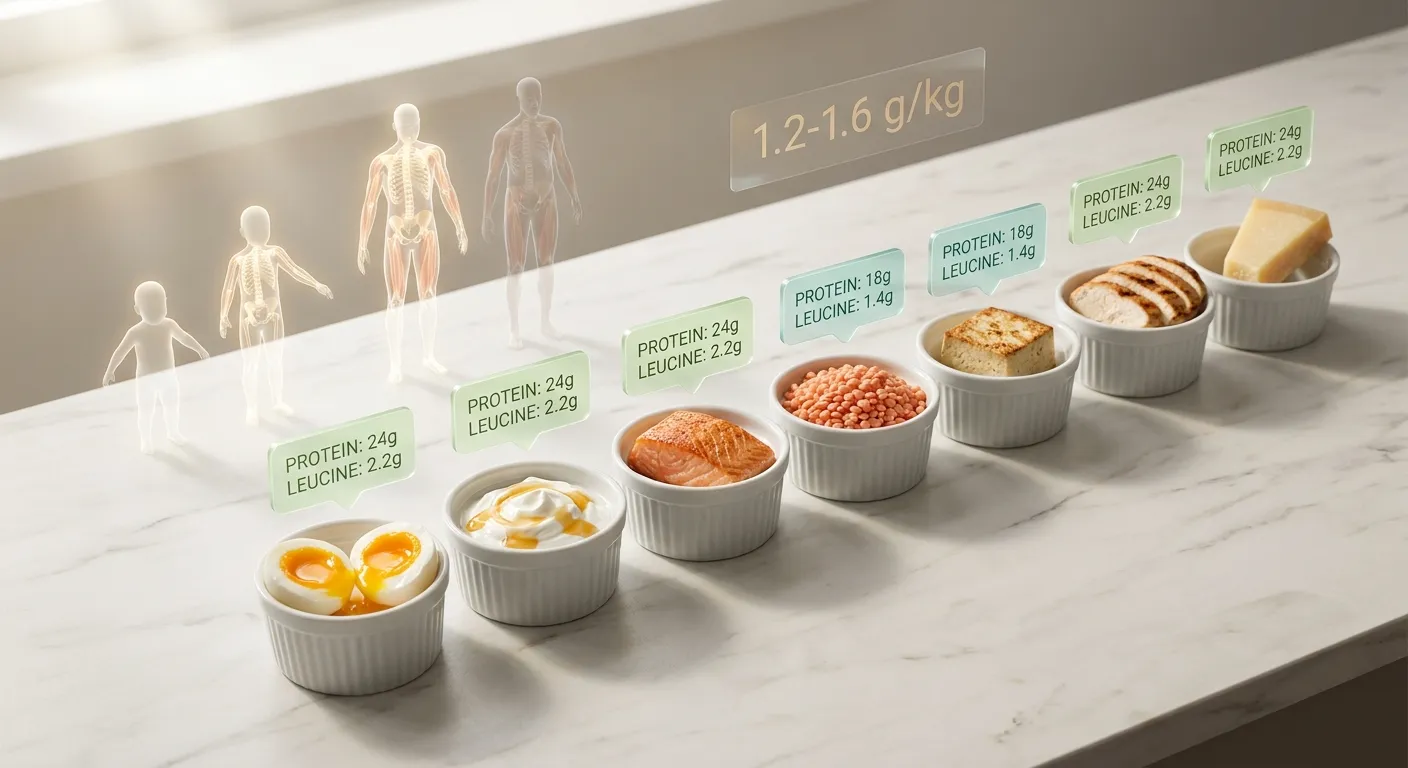
How Much Protein Do You Actually Need? 2026 Guide
The 0.8 g/kg RDA is from 1968. New evidence puts most adults at 1.2-1.6 g/kg, older adults higher. A by-age cheat-sheet, no powder required.
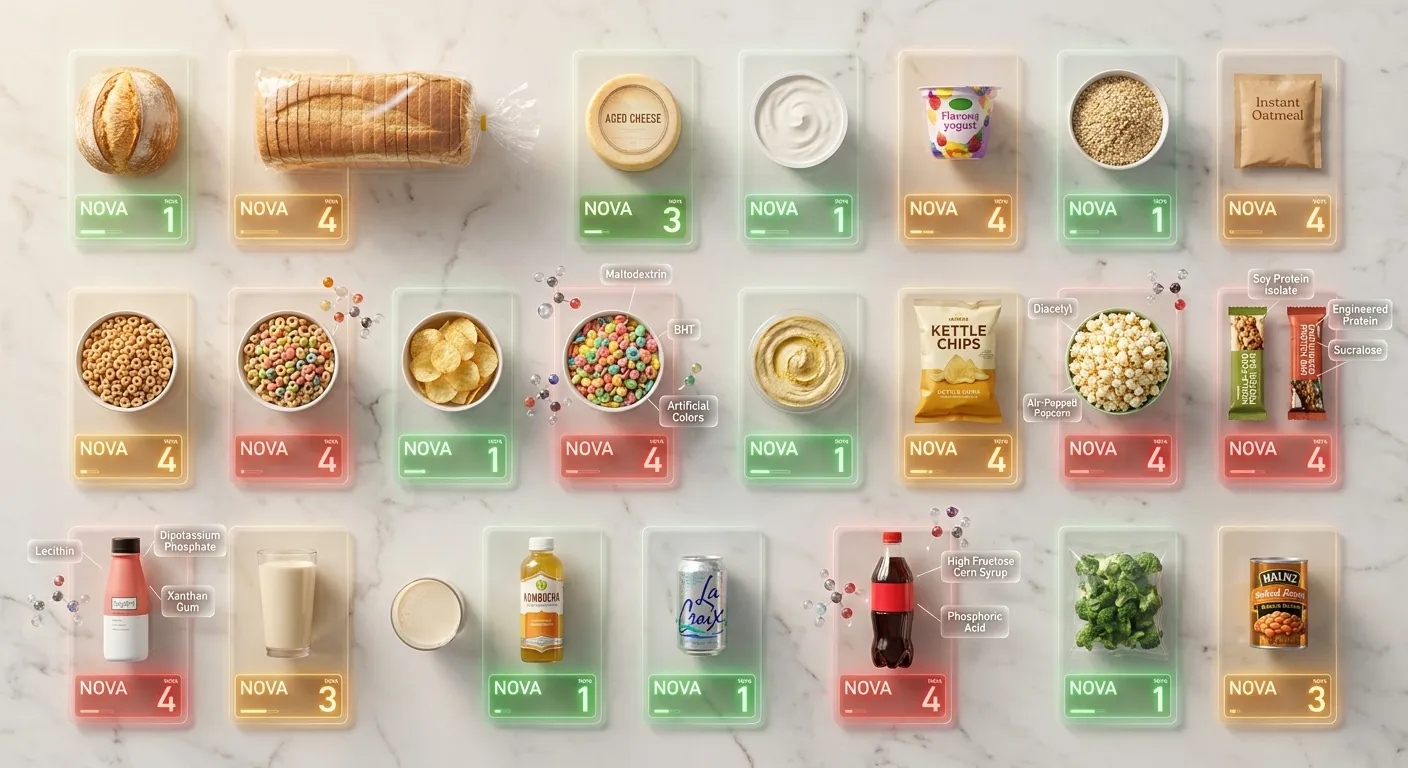
Is It Ultra-Processed? 30 Foods Decoded
A food-by-food NOVA verdict for 30 things in your cart: sourdough vs. supermarket loaf, RXBAR vs. Quest, oat milk vs. barista oat. With the why.
